
Importer of record and customs bond: who needs what

The importer of record (IOR) is the party legally responsible for a U.S. import: it declares the goods, pays the duties, and answers to CBP. A customs bond, a surety guarantee behind those duties, is needed for most formal entries (over $2,500) and for ocean cargo. ExperShip explains when you need each and who can act.
Key takeaways
- The IOR is the owner, purchaser or consignee (or a licensed customs broker they designate). Liability for accurate declarations and unpaid duties sits with the IOR, not the carrier.
- You generally need a customs bond for formal entries (goods valued over $2,500) and for ocean cargo that requires an ISF filing. Low-value informal entries (up to $2,500) usually do not need one.
- Amazon does not act as importer of record for FBA inventory. The seller, or the broker and forwarder the seller appoints, has to be the IOR.
This is general education, not legal or customs advice. ExperShip is shipping software, not a customs broker or a bond surety. Confirm your setup with a licensed U.S. customs broker before your first entry.
What is an importer of record?
The importer of record is the person or company that CBP (U.S. Customs and Border Protection) holds responsible for a specific import entry. Under 19 U.S.C. 1484, that is the owner or purchaser of the goods, the consignee, or a licensed customs broker designated by one of them.
Being the IOR means you:
- Use reasonable care to declare the right tariff classification (HTS code), value and country of origin.
- Pay duties, taxes and fees on the entry.
- Keep entry records, generally for five years.
- Take the penalty risk if the declaration is wrong, even if a broker filed it for you.
A carrier delivering your parcel is not the IOR by default. Its brokerage files paperwork for you under a power of attorney (a signed authorization), but the legal responsibility stays with the importer on record.
Can a foreign company be the importer of record?
Yes. A nonresident company can be the IOR. In practice it needs an importer identification number (created with CBP Form 5106), a customs bond issued by a surety licensed to write U.S. customs bonds, and a U.S. agent who can accept legal documents on its behalf. Most overseas brands set this up through a customs broker rather than doing it alone.
What is a customs bond?
A customs bond (CBP Form 301) is a three-party contract between the importer, a surety company and CBP. If the importer fails to pay duties, fees or penalties, the surety pays CBP and then collects from the importer. It is not insurance for you. It protects the government.
There are two common types:
| Bond type | Covers | Amount (per 19 CFR Part 113, as of October 2026) | Best for |
|---|---|---|---|
| Single transaction bond (STB) | One entry | Generally the entered value plus duties, taxes and fees | Occasional or first-time imports |
| Continuous bond | All entries for 12 months, renewable | 10% of duties, taxes and fees paid in the prior 12 months, rounded up to the next $1,000, with a $50,000 minimum | Repeat importers, regular ocean shipments |
Worked example: if you paid $380,000 in duties and fees last year, 10% is $38,000, so you still post the $50,000 minimum. At $620,000 in duties and fees, the bond is $62,000. You do not pay that amount. You pay the surety a premium, which varies by surety and your profile, so get at least two quotes. The rules are in 19 CFR Part 113.
When is a customs bond needed?
It depends on the entry type and the mode of transport. The short version:
| Situation | Bond needed? | What actually happens |
|---|---|---|
| Informal entry, goods up to $2,500 | Usually no | Common for low-value parcels. CBP can still require a bond for specific goods. |
| Formal entry, goods over $2,500 | Yes | A broker files the entry and the bond secures the duties. |
| Goods that require formal entry regardless of value (for example, those subject to antidumping or countervailing duties) | Yes | Even a small shipment needs a formal entry and a bond. |
| Ocean cargo requiring an ISF | Yes | The ISF (Importer Security Filing) is due 24 hours before loading at the foreign port. A bond covers the ISF liability. |
| Air or express parcels cleared by the carrier | Depends | Ask the carrier's brokerage whether the entry needs your bond or their process covers it. |
For the full split between informal and formal entry, see our guide to U.S. customs entry types. ISF rules, the "10+2" data elements (ten from the importer, two from the carrier), and the deadline are in 19 CFR Part 149. For the glossary definition, see ISF.
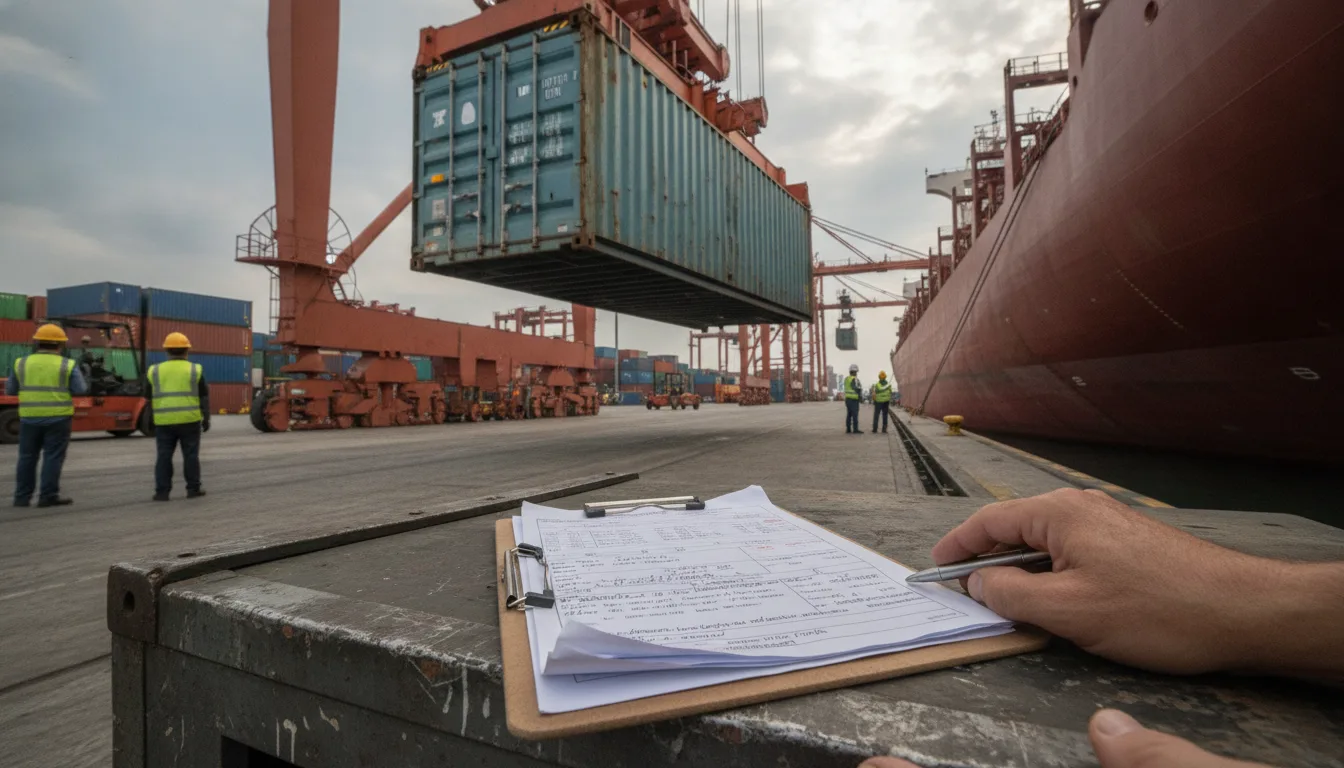
Who needs what: IOR, bond and broker by seller type
| Seller type | Who is usually the IOR | Bond | Broker |
|---|---|---|---|
| Overseas brand shipping DTC parcels to U.S. buyers | Set by the carrier service and terms: the buyer as consignee, or the shipper under DDP. Confirm in writing. | Often not needed for informal entries | Carrier's brokerage |
| Overseas brand sending inventory by ocean to a U.S. warehouse or FBA | The brand (as a nonresident importer) or a U.S. entity it controls | Yes: single or continuous | Licensed broker, with a power of attorney |
| Consolidator moving many sellers' goods | Depends on contracts: each seller, or the consolidator under its own number | Continuous bond is typical at volume | Broker, often a standing arrangement |
| U.S. seller buying from an overseas factory | The U.S. seller, as purchaser | Yes for formal entries and ocean cargo | Strongly advised |
| U.S. seller shipping out to foreign buyers (exports) | Not applicable on the U.S. side. The buyer or foreign broker handles destination import. | No U.S. import bond | Optional, for destination rules |
Does Amazon act as importer of record for FBA?
No. Amazon never acts as importer of record for FBA inventory. If you ship stock to a U.S. fulfillment center from overseas, you (or the customs broker and freight forwarder you appoint) must be the IOR, post any bond, file the ISF for ocean cargo, and pay the duties. Amazon's receiving process starts after customs clearance. Plan for the IOR, bond and entry before the container leaves, not when it lands.
Single transaction or continuous bond: how to decide
It comes down to how many entries you file a year. A hypothetical comparison (get real quotes, premiums vary): suppose a single transaction bond costs $60 per shipment and a continuous bond costs $450 a year. The break-even is 7.5 shipments, so anyone importing eight or more times a year usually saves with a continuous bond. A continuous bond also saves you from arranging a new bond for every container.
Weekly ocean shipments, as on ExperShip's LCL freight lane from Turkey to the U.S., are exactly the repeat pattern where a continuous bond makes sense. Cargo insurance is included on every LCL freight shipment, but that covers your cargo, not your duties. A customs bond is a separate thing.
How to set yourself up as importer of record
- Decide who the IOR will be. The brand, a U.S. subsidiary, or the buyer. Write it into your sales and logistics contracts.
- Get an importer number. U.S. companies use their EIN. Foreign companies file CBP Form 5106 for a CBP-assigned number.
- Choose a licensed customs broker. Sign a power of attorney so they can file entries for you.
- Get a bond quote. Compare a single transaction bond against a continuous bond using your expected entries and annual duties.
- Lock down classification and value. Confirm HTS codes, commercial invoice value and country of origin. Use the U.S. import duty calculator for a rough duty estimate before you commit to pricing.
- File the ISF for ocean cargo. It must be filed at least 24 hours before the goods are loaded at the foreign port.
- Keep records. Retain invoices, entry summaries and payment proof for five years.
How the end of de minimis changed this
De minimis (duty-free entry for low-value shipments) has been suspended since August 29, 2025, and CBP made the suspension indefinite in June 2026. Low-value parcels are no longer a duty-free shortcut. Every importer now needs a clear answer on who is the IOR and who pays duties, even for small orders. The details are in our de minimis suspension explainer, and the DDP vs DDU guide covers who pays at delivery.
Where ExperShip fits
ExperShip is multi-carrier shipping software and an API. International labels come with customs documents, so the paperwork travels with the parcel. DDP (the shipper pays duties and taxes, taken from your prepaid balance) is live on the Custom plan only. ExperShip does not act as your customs broker or issue customs bonds. For the wider picture, start with the cross-border ecommerce shipping guide, and for the Turkey lane see shipping from Turkey to the USA.
Frequently asked questions
Do I need a customs bond to import into the U.S.?
Usually yes for formal entries (goods over $2,500) and ocean cargo needing an ISF. Informal entries up to $2,500 generally do not, though CBP can require one for certain goods.
Can I be my own importer of record?
Yes, if you own or purchase the goods and have an importer number. Many sellers still hire a licensed customs broker to file entries, because you stay liable for what is declared.
How much does a customs bond cost?
You pay a premium, not the bond amount. A continuous bond has a $50,000 minimum amount, and premiums vary by surety and your import history, so compare several quotes.
Who is the importer of record for Amazon FBA shipments?
You are, or the broker and forwarder you appoint. Amazon does not act as importer of record for FBA inventory.
Does DDP make the shipper the importer of record?
Not automatically. DDP decides who pays duties and taxes, while the IOR is a legal designation on the entry. Confirm both with your broker or carrier.
Ready to ship cross-border with labels and customs documents in one place? Start your 30-day free trial on Starter or Growth, no card needed to sign up.