
De minimis suspension and U.S. imports: what changed since August 29, 2025

The de minimis suspension for U.S. imports means commercial parcels no longer enter the United States duty-free under the $800 Section 321 exemption. Since August 29, 2025, duties apply to goods from every country, whatever the value, and CBP made the suspension indefinite in June 2026. ExperShip puts customs documents on every international label.
Key takeaways
- Since August 29, 2025, the $800 duty-free de minimis exemption is suspended for all countries, and CBP made the suspension indefinite for all modes of transportation in June 2026.
- A $20 parcel and a $2,000 shipment now both owe duty based on HTS code and country of origin. Someone has to pay it: the recipient, or the shipper under DDP.
- Accurate commercial invoices, HTS codes and country of origin matter far more than before, because every commercial parcel is now a dutiable import.
- Do not plan around the exemption coming back. The statute behind it is also scheduled for repeal on July 1, 2027.
What was de minimis, and what does the suspension change?
De minimis is the value threshold below which an import is exempt from duty and most formal entry paperwork. In the U.S. it came from Section 321 of the Tariff Act of 1930 (19 U.S.C. 1321). Since March 10, 2016, the limit was $800 per person per day. A shipment under that line could clear on a light-touch basis, usually with no duty at all.
That is the part that ended. Under Executive Order 14324, the exemption was suspended for all countries starting at 12:01 a.m. Eastern on August 29, 2025. CBP later confirmed the suspension would continue indefinitely for all shipping modes (CBP CSMS #66065494 and Federal Register document 2026-12670, both June 2026). For a short definition, see the de minimis glossary entry. This article covers the change itself and what it does to your shipments.
What changed, and when? A dated log
Here is the sequence, oldest first. Re-check CBP before relying on any line, because this area moves.
| Date | What changed | Source |
|---|---|---|
| 2016-03-10 | De minimis threshold rises from $200 to $800 per person per day. | 19 U.S.C. 1321 |
| 2025-05-02 | Duty-free de minimis treatment ends first for goods from China and Hong Kong. | Executive Order 14256, CBP guidance |
| 2025-07-30 | Executive Order 14324 signed, suspending de minimis for all countries. | White House, Federal Register |
| 2025-08-29 | Suspension takes effect for all countries. Commercial parcels become dutiable regardless of value. | Executive Order 14324, CBP CSMS messages |
| 2026-06 | CBP makes the suspension indefinite for all modes of transportation. | CBP CSMS #66065494; Federal Register 2026-12670 |
| 2027-07-01 (scheduled) | Statutory repeal of de minimis takes effect under the One Big Beautiful Bill Act. | Public Law 119-21 (verify before relying on it) |
How does a parcel clear U.S. customs now?
Before the change, a $60 order from an overseas Shopify store usually landed with no duty and minimal data. Now the same parcel is a dutiable import. Here is what happens in practice:
- The seller or carrier submits entry data: description, HTS code (the Harmonized Tariff Schedule classification), country of origin, and value.
- CBP assesses duty using the HTS rate and any additional tariff actions that apply to that origin and product on the date of entry.
- The carrier or broker collects the money. Under a delivery-duties-unpaid arrangement, the recipient is billed, often before or at delivery, plus a carrier handling fee.
- If the recipient refuses to pay, the parcel can stall, be returned or be abandoned, and the seller eats the freight both ways.
A hypothetical example: a $60 candle set carries a combined 10% duty rate. That is $6.00 of duty before any carrier fee, so the shopper who expected to pay $60 now faces $66 or more at the door. Rates differ by product and origin, so treat that 10% as an illustration, not a forecast. You can estimate your own with the U.S. import duty calculator.
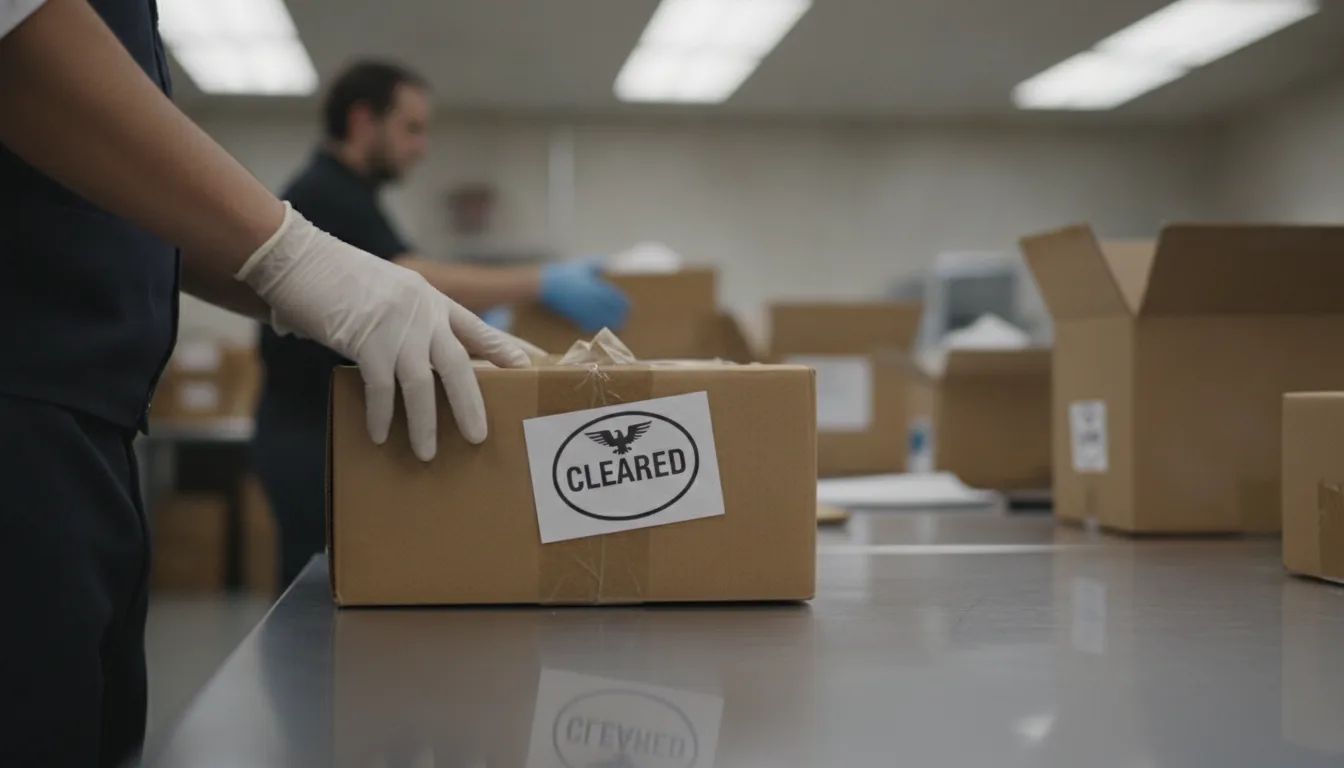
Does the suspension apply to every country and every shipping method?
Yes, with a narrow exception. The suspension covers goods from all countries and, since CBP's June 2026 notice, all modes: air, ocean, land and postal. The long-standing gift provision (gifts valued at $100 or less, sent person to person) is separate, and it does not cover goods you sell. Do not label sales as gifts to dodge duty. That is a misdeclaration, and CBP can penalize it.
| Question | Before 2025-08-29 | Now |
|---|---|---|
| Duty on a $50 commercial parcel | None (under $800) | Due, based on HTS code and origin |
| Data CBP expects | Minimal for low-value entries | Full classification, origin and value |
| Who normally pays | Nobody | Recipient (DDU/DAP) or shipper (DDP) |
| Splitting orders under $800 | Common workaround | No longer helps, value does not decide |
Who pays the duty: you or your customer?
That is now a business decision, not a footnote. With DDU or DAP (the recipient pays duties and taxes on arrival), your checkout price looks low but delivery gets messy. With DDP, you pay duties and taxes up front so the shopper pays nothing extra at the door. Our guide to DDP versus DDU walks through both.
On ExperShip, DDP is live on the Custom plan only, with duties and taxes taken from your prepaid USD balance. On Starter and Growth, plan on the carrier billing the recipient. Estimate duty yourself with the duty calculator and your customs broker's numbers.
What should overseas sellers do now?
- Classify every SKU. Assign a 10-digit HTS code and record the country of origin (where it was made, not where it ships from). Keep your reasoning on file.
- Fix your commercial invoices. Use a plain description ('cotton knit sweater, women's', not 'clothing'), unit value, quantity and origin. International labels bought through ExperShip include customs documents, but they are only as accurate as the data you enter.
- Choose a duty model per market. Decide whether you show duties at checkout, absorb them through DDP, or build them into price.
- Compare parcel with freight for stock. If you ship the same SKUs repeatedly, one bulk shipment cleared once and then sent domestically can beat paying duty plus express fees parcel by parcel.
- Update your policies. Tell customers who pays duty and what happens on refusal. The shipping policy generator helps with wording.
When does bulk freight beat parcels after de minimis?
Parcels pay duty plus per-package carrier fees. Ocean freight moves inventory in bulk and clears it as a proper entry, then you ship orders domestically from a U.S. warehouse. That does not remove duty. It changes how and when you pay it, and it swaps many international parcels for cheap domestic ground ones.
ExperShip runs LCL (less-than-container-load) ocean freight from Turkey to the U.S. with weekly container departures, and cargo insurance is included on every LCL shipment. No other origin is live. A formal ocean entry brings its own requirements: an importer of record, usually a customs bond (a continuous bond typically starts at $50,000 in coverage), and an ISF filing submitted at least 24 hours before the cargo is loaded at the foreign port. Our LCL ocean freight guide explains when it wins, and you can request pricing at ExperShip freight.
What about the exemption coming back?
Plan as if it will not. The suspension is indefinite, and the statutory repeal of de minimis is scheduled for July 1, 2027. Rules and tariff rates keep shifting, so re-check the CBP and Federal Register sources above before you set prices. For the full import picture, start with our cross-border ecommerce shipping guide, or see how ExperShip handles cross-border shipping into the U.S.
Frequently asked questions
Can I still ship parcels into the U.S. duty-free?
No, not as commercial goods. Since August 29, 2025, the $800 de minimis exemption is suspended for all countries, so commercial parcels owe duty based on their HTS code and origin. Only narrow provisions such as the $100 gift rule remain, and they do not cover items you sell.
Is the de minimis suspension permanent?
CBP made it indefinite for all modes of transportation in June 2026, and Congress has separately scheduled repeal of the statute for July 1, 2027. Treat it as long-term, and verify current status on cbp.gov.
Who pays the duty on a low-value parcel now?
It depends on the terms. Under DDU or DAP the recipient pays, usually through the carrier. Under DDP the shipper pays up front. On ExperShip, DDP is live on the Custom plan only.
Does the suspension apply to ocean freight too?
Yes. CBP's June 2026 notice covers all shipping modes. Ocean freight already clears as a formal entry, so the main difference is that more sellers are comparing it against parcel shipping.
Start your 30-day free trial of ExperShip (no card needed) and ship internationally with customs documents on every label.