
How consolidators inject parcels into U.S. carrier networks
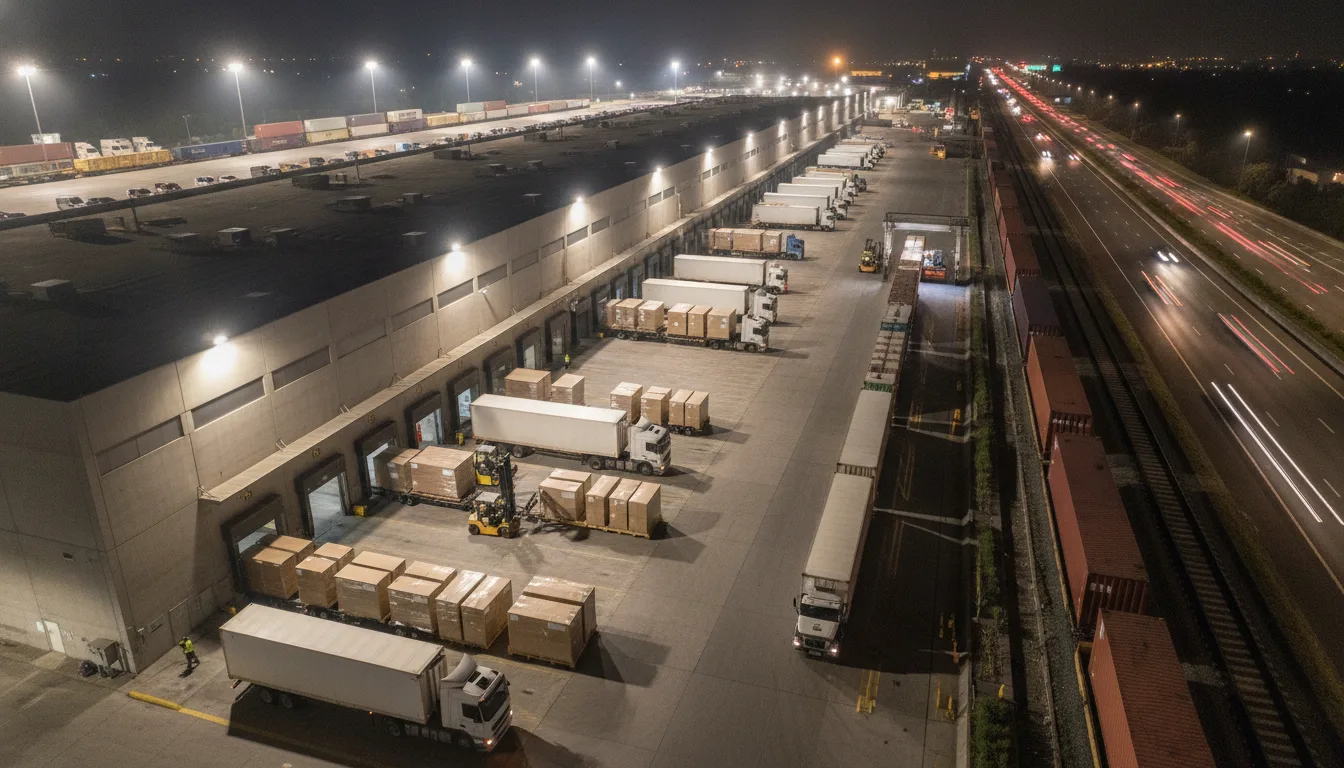
Cross-border parcel injection is how consolidators hand a bulk shipment of many sellers' parcels to a U.S. carrier network at a point past the border, usually after customs clearance, instead of tendering each parcel at origin. ExperShip, multi-carrier shipping software, supplies the labels and data that make that handoff scannable.
Key takeaways
- Injection means consolidating parcels abroad, moving them in bulk (air or ocean), clearing customs in the U.S., then handing them to USPS, UPS, FedEx or a regional carrier near the destination.
- The deeper you inject (closer to the recipient), the fewer carrier handling steps and zones you pay for, but the more logistics you run yourself.
- Customs comes first. With U.S. de minimis suspended, every parcel in a consolidated shipment needs a lawful entry and a responsible importer of record.
- Injection fails on bad data: wrong weights, missing manifests and unscannable labels cost more than the trucking does.
What is cross-border parcel injection?
Parcel injection (also called induction or destination entry) is the act of tendering parcels to a carrier at a facility downstream in its network, rather than at the carrier's first pickup point. In cross-border ecommerce, a consolidator gathers parcels from many overseas sellers, ships them together to a U.S. gateway, clears them, and then injects them into the domestic last-mile network.
The reason is cost and control. A carrier's cross-border product bundles the long haul, customs handling and delivery into one price per parcel. A consolidator that moves 3,000 parcels on one pallet-load or air container can price the long haul per kilogram, then buy only the domestic leg from the carrier. The same logic powers zone skipping: a zone is a price band based on distance from the origin ZIP code, and trucking parcels to a regional hub lets you ship from a closer origin, so the carrier prices them in a lower zone.
This article covers the import-to-injection flow. If you are shipping out of the U.S., see shipping out of the U.S. instead. For the full import picture, start with the cross-border ecommerce shipping guide.
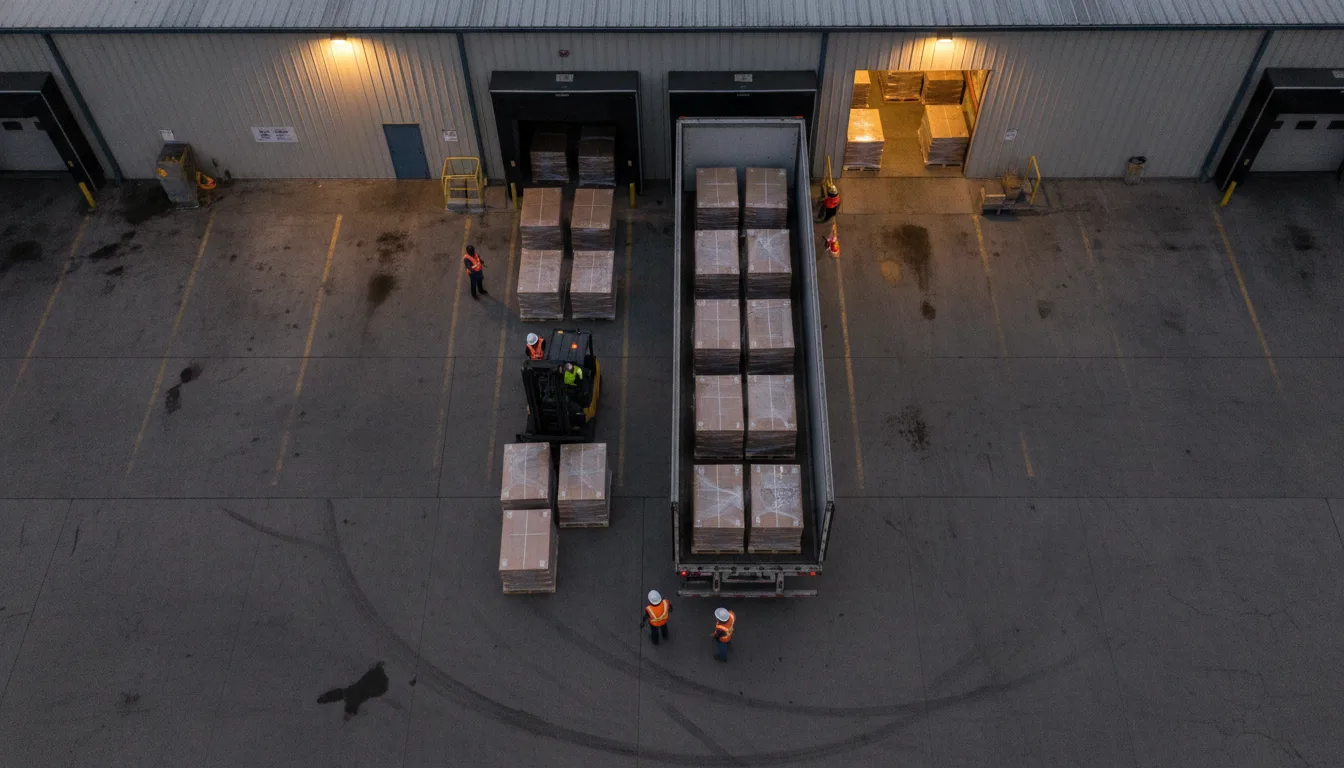
How is injection different from tendering parcels directly with a carrier?
| Model | Where parcels enter the carrier | Who handles customs | Best for | Trade-off |
|---|---|---|---|---|
| Direct carrier cross-border service | Origin country pickup | Carrier, with its own broker | Low volume, one-off parcels | Highest per-parcel price, less control |
| Consolidated gateway injection | Carrier hub or sortation center near the U.S. gateway | Your broker and importer of record | Steady volume from many sellers | You own customs data and the first U.S. mile |
| Regional or destination injection | Closer to recipients (regional hub, sectional facility, local delivery unit) | Same as above, plus trucking in the U.S. | Dense volume to the same metro areas | More drops, more appointments, more things to coordinate |
Most consolidators start at the gateway and add regional injection only when they see enough parcels per destination region to fill a truck or pallet.
How does the injection process work, step by step?
- Collect and pre-alert. Sellers send parcels to your overseas facility and each parcel gets a seller ID and a data record (weight, dimensions, destination, contents, value, country of origin, and an HTS code, the U.S. tariff classification).
- Build the manifest. A manifest is the line-by-line list of everything in the shipment. It is the document customs, the trucker and the carrier all rely on.
- Line haul. Move the consolidated load to the U.S. by air, or by ocean for heavier, less urgent goods (see LCL ocean freight for how partial containers work).
- Customs clearance. A licensed customs broker files the entry for the goods, and the importer of record takes legal responsibility for duties and accuracy. See U.S. customs entry types and importer of record and customs bond.
- Deconsolidate and sort. Break the load down at a U.S. facility and sort by destination region and by carrier.
- Label and rate. Buy a domestic label per parcel, choosing the carrier and service by weight, size and destination. Labels must match the real, measured weight and dimensions.
- Induct. Deliver the sorted parcels to the carrier's facility (or have them picked up), usually by appointment, with the carrier's required scan form or electronic manifest.
- Track and reconcile. Confirm first scans, watch for exceptions and compare carrier invoices against what you manifested.
Where can parcels be injected in the U.S.?
USPS publishes the clearest destination-entry structure, so it is the usual example. Mailers that meet the preparation and documentation rules can drop at three depths (see the USPS Domestic Mail Manual, section 705, for eligibility and prep requirements):
| Entry point | What it is | Trade-off |
|---|---|---|
| DNDC (Destination Network Distribution Center) | Large regional USPS hub serving a wide area | Fewer drops, shorter trucking, still some USPS handling to go |
| DSCF (Destination Sectional Center Facility) | Processing facility serving a group of 3-digit ZIP areas | Deeper discount potential, more drop points to manage |
| DDU (Destination Delivery Unit) | The local post office that delivers to the recipient's ZIP | Fastest final handling, but only practical at high local density |
UPS, FedEx and regional carriers each have their own hub, sort and pickup arrangements, usually set by contract with an account representative. Their economy ground products (for example UPS Ground Saver and FedEx Ground Economy) are built for lightweight residential volume, which is what most consolidated ecommerce looks like. Terms, drop windows and minimums vary by carrier and contract, so confirm them in writing before you build a lane around one.
Does customs still apply when you inject after clearance?
Yes, and it always happens first. Injection is a domestic carrier handoff, so the goods must already be lawfully entered into the U.S. Since August 29, 2025, the duty-free de minimis exemption for low-value parcels has been suspended, and CBP made that suspension indefinite in June 2026. Consolidators can no longer treat each parcel as a small shipment that slips through. See what changed with the de minimis suspension.
In practice that means three things for an injection operation:
- Entry type. Informal entry generally applies to shipments up to $2,500 in value (see 19 CFR 143.21), with formal entry above that or for goods with special requirements. Consolidated loads often exceed $2,500 in aggregate, so ask your broker how they structure entries for many consignees.
- Importer of record. Someone must own the entry. Overseas parties face tightening requirements, covered in CBP's foreign importer of record rule. ExperShip offers CTPAT consulting, but ExperShip is not a licensed customs broker and is not itself CTPAT validated, so you still need a broker for filings.
- Ocean loads. Ocean shipments need an Importer Security Filing before the cargo is loaded. See ISF filing (10+2).
What data does a parcel need before it is injected?
Carriers scan, they do not investigate. If the data on the label and manifest is wrong, you find out in the invoice. A clean pre-alert file looks like this (copy and adapt the columns):
parcel_id,seller_id,weight_lb,length_in,width_in,height_in,dest_zip,hts_code,declared_value_usd,country_of_origin
CP-000184,S-221,1.8,10,8,4,90210,6109.10.0012,24.00,TR
CP-000185,S-221,0.6,9,6,2,60614,7117.19.9000,18.50,TR
Fields that cause the most trouble in practice:
- Weight and dimensions. Carriers bill the greater of actual and dimensional weight. Published domestic divisors are commonly 139 cubic inches per pound for UPS and FedEx daily rates, and USPS applies dimensional weight to packages above one cubic foot (divisor 166). Confirm current figures with each carrier. Measure parcels yourself instead of trusting seller-entered numbers; see dimensional weight explained.
- Destination address. A malformed address becomes a mis-sort or a correction fee after injection, when you have the least ability to fix it.
- Classification and origin. Wrong HTS codes or missing country of origin create customs delays and penalty exposure. Our HTS code lookup guide explains how to classify.
Where does ExperShip fit in a parcel injection workflow?
ExperShip is the label and data layer, not the trucking or the customs filing. It is multi-carrier shipping software plus an API: you buy, print, track and automate domestic labels across carriers from one place, at ExperShip's discounted rates, without needing a carrier account of your own. International labels come with customs documents. Rate shopping and automation rules (on the Growth plan and above) can assign a carrier and service to each sorted parcel by weight and destination. See multi-carrier shipping explained for the logic.
Two honest limits. First, connecting your own carrier account is not available yet, so if your injection model depends on your own USPS permit, drop contracts or negotiated carrier rates, ExperShip does not replace that today. Second, plan fit depends on volume. Growth is $49.99 a month for up to 5,000 labels a month and includes the API. Consolidators and high-volume shippers are on the Custom plan, priced by talking to sales, and DDP (duties and taxes paid by the shipper, taken from the prepaid balance) is live on Custom only. Details are on shipping software for consolidators and pricing, and you can contact sales to scope a consolidator setup.
If your volume originates in Turkey, ExperShip also runs LCL ocean freight from Turkey to the U.S. with weekly container departures and cargo insurance included on every LCL shipment. Door-to-door ocean transit is typically 25 to 35 days. Details are on the LCL freight service page. No other origin is live.
What goes wrong with parcel injection, and how do you prevent it?
- Manifest does not match the pallet. Carriers can refuse or reprocess. Reconcile counts before the truck leaves, and scan parcels onto the load.
- Missed appointment windows. A late drop can miss a day's sort and break delivery promises. Build buffer into the trucking schedule.
- Label reprints after sorting. Reprinting a label means a second touch on every parcel. Validate addresses before buying labels. Batch label printing helps keep sort order intact (see how to batch-print shipping labels).
- Invoice adjustments. Weight, dimension and address corrections show up weeks later. Keep your measured data and compare it against each carrier invoice.
- Customs holds. A hold on one consignee's goods should not strand the whole load. Ask your broker whether they can release compliant entries separately.
When does injection make sense, and when does it not?
Injection pays when you have steady, predictable volume that is dense by destination region, with lightweight parcels where carrier zone and cross-border surcharges dominate the price. It does not pay for sporadic volume, for highly scattered destinations, or for teams without a customs broker and a U.S. receiving site. If you move a few hundred parcels a month, a carrier's direct cross-border service is simpler. If you move thousands a week to the same coastal metros, injection is worth modeling.
Frequently asked questions
What does injection mean in parcel shipping?
Injection (or induction) means handing parcels to a carrier at a downstream facility in its network instead of at the first pickup point. It skips the carrier's origin and long-haul legs, which you move yourself.
Is parcel injection legal for cross-border ecommerce?
Yes, as long as the goods are lawfully entered into the U.S. first. Customs clearance, a proper entry type and an importer of record come before any domestic handoff, and low-value goods are not duty-free since de minimis was suspended.
What is the difference between parcel injection and zone skipping?
Zone skipping is the cost outcome, injection is the method. You truck consolidated parcels to a regional point and tender them there, so the carrier prices each parcel in a lower zone than it would from the origin.
Does ExperShip handle customs filing or physical injection?
No. ExperShip provides the shipping software and API for labels, tracking and automation across carriers, and offers CTPAT consulting. It is not a licensed customs broker, so entry filing goes through your broker.
Ready to scope your consolidator setup?
Start your 30-day free trial of ExperShip (no card needed on Starter or Growth) to test label buying and automation, then talk to sales about Custom if your volume calls for it.