
Dimensional weight: what it is and how to lower it
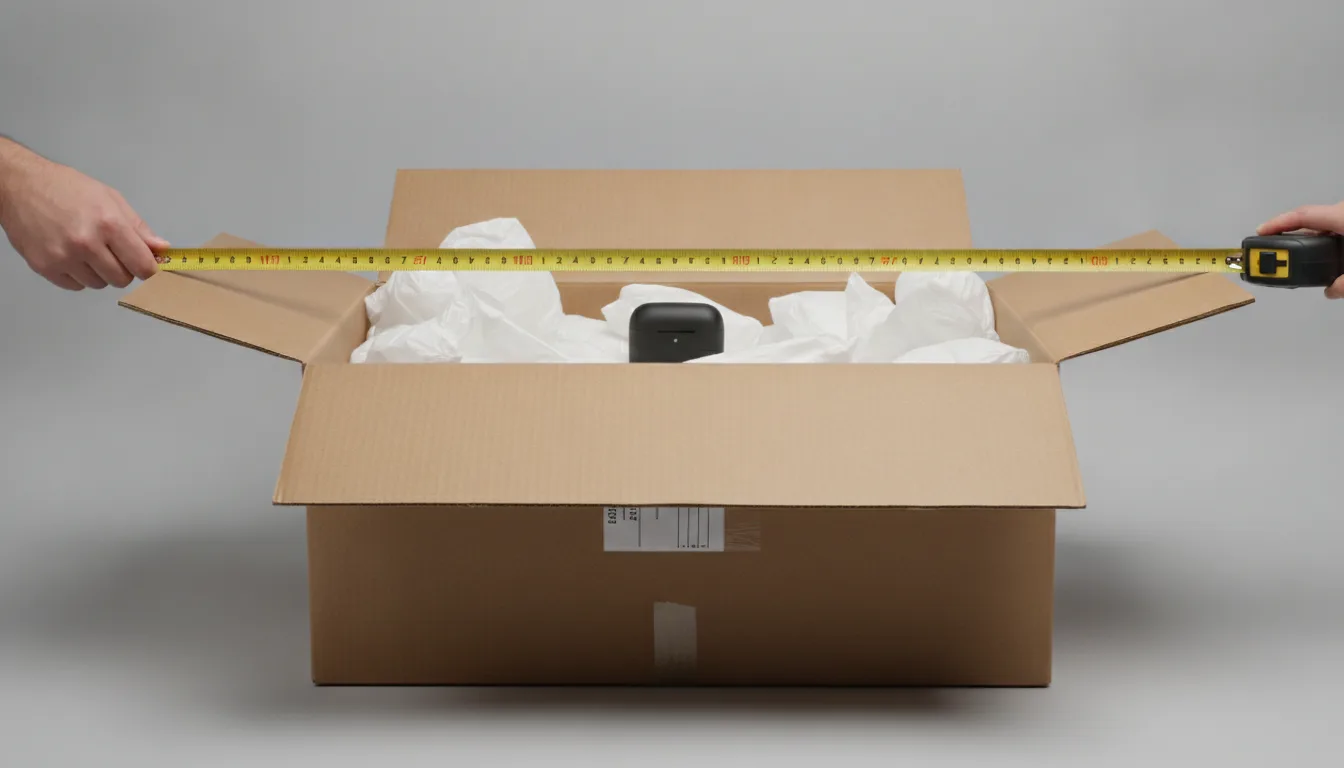
Dimensional weight (also called DIM weight or volumetric weight) is a pricing method carriers use to charge for a package based on the space it takes up, not just what it weighs on a scale. The general formula is length x width x height divided by a dimensional factor (the "DIM divisor"). Carriers bill you on the greater of a parcel's actual weight and its dimensional weight, so a big, light box can cost far more than its scale weight suggests. This guide explains the formula, walks through an illustrative example, and shows how to lower your dimensional weight.
Why carriers charge by dimensional weight
Trucks and planes run out of space before they run out of weight capacity. A carrier can only fit so many boxes, so a large, light package uses up cargo room that could have held revenue-generating freight. Dimensional weight pricing lets carriers charge for that space. It is why a pillow and a paperweight can cost very different amounts to ship even if the pillow is lighter.
The dimensional weight formula
The general formula is:
dimensional weight = (length x width x height) / dimensional factorYou measure the package's outer dimensions, multiply them to get the cubic size, then divide by the carrier's dimensional factor (also called the DIM divisor). The result is a weight. You then compare it to the actual scale weight, and the carrier bills you on whichever is larger, the billable weight.
Important: the exact dimensional factor is not universal. It varies by carrier, by service level, and by whether you are shipping domestically or internationally, and carriers change it over time. There are also different divisors for measurements in inches versus centimeters. Always check the current dimensional factor in the specific carrier's official documentation for the exact service you are using. Do not rely on a single number you saw once, including any number in this article.
A worked example (illustrative only)
The numbers below are made up to show the mechanics. They are not any carrier's real rate or divisor. Always substitute the current values from your carrier.
Suppose you ship a box measuring 20 x 16 x 12 inches, and the product inside weighs 8 pounds on the scale. Using an illustrative dimensional factor of 139 (for inches and pounds):
cubic size = 20 x 16 x 12 = 3,840 cubic inches
dimensional weight = 3,840 / 139 = 27.6, rounds up to 28 lb
Actual weight is 8 lb, dimensional weight is 28 lb. The carrier bills the greater number, so you pay as if the box weighed 28 pounds, more than three times its scale weight. That gap is the cost of shipping a box that is much bigger than it needs to be. If you change the divisor to a different carrier's value, the billable weight changes, which is exactly why you must check the real number.
How to calculate it for your own parcels
- Measure the outside length, width, and height of the packed box. Round each up per your carrier's rounding rule.
- Multiply the three to get the cubic size.
- Look up your carrier and service's current dimensional factor in their official documentation.
- Divide the cubic size by that factor to get dimensional weight, and round per the carrier's rule.
- Compare to the actual weight. The larger number is your billable weight.
How to lower your dimensional weight
Since dimensional weight is driven by box size, the fix is to reduce the space your parcels occupy:
- Right-size the box. Use packaging that closely fits the product. This is the biggest lever by far.
- Stock several box sizes so you are never forced to put a small item in a large box.
- Switch to mailers for soft or non-fragile goods; flexible packaging often measures smaller.
- Reduce void fill. Excess padding forces a bigger box; smart fill lets you size down.
- Break up or redesign kits that force awkward, oversized boxes.
- Flatten and fold where the product allows, to cut the largest dimension.
When dimensional weight matters most
| Product type | DIM weight risk | Why |
|---|---|---|
| Light but bulky (pillows, lampshades) | High | Low scale weight, large volume |
| Small and dense (tools, books) | Low | Actual weight usually wins |
| Apparel in oversized boxes | High if boxed | Mailers cut volume dramatically |
| Fragile items with heavy padding | Medium to high | Padding inflates box size |
Fit dimensional weight into the bigger picture
Dimensional weight is one of the main reasons shipping bills come in higher than expected, so it connects to nearly every cost decision. See how to reduce shipping costs for the full checklist, rate shopping to compare carriers whose DIM factors differ, and the complete ecommerce shipping guide for context. Different carriers use different dimensional factors, which is another reason to run multi-carrier shipping.
How Expership helps
Expership is multi-carrier shipping software and an API for ecommerce sellers. Comparing carriers on the same parcel surfaces which one's dimensional pricing is cheapest for your box, so you are not guessing. See the platform or create an account.
Frequently asked questions
What is dimensional weight in simple terms?
It is a way carriers charge you for how much space a package takes up rather than only what it weighs. You calculate it from the box's dimensions and compare it to the scale weight; the larger figure is what you are billed on.
What is the dimensional factor or DIM divisor?
It is the number you divide the cubic size by to get dimensional weight. It varies by carrier, service, and units (inches versus centimeters), and it changes over time, so always confirm the current value in the carrier's official documentation.
How do I lower my dimensional weight?
Shrink the package. Right-size your boxes to the product, use mailers for soft goods, and cut excess void fill. Reducing box size lowers the cubic measurement that drives dimensional weight.
Does dimensional weight apply to every shipment?
Most parcel carriers apply it, but the exact rules, factors, and thresholds differ by carrier and service. Some services and very small packages may be treated differently, so check the terms for the service you use.
Why is my billed weight higher than my scale weight?
Because the carrier billed the dimensional weight instead of the actual weight. When a box is large relative to its contents, its dimensional weight exceeds its scale weight and becomes the billable weight.